
Three Citruses, One Diabetic Legend, and the Maraschino Nobody Agrees On
Hemingway, Embellished

We did a tiki night with the kids about a year ago and genuinely loved it. So this isn’t some blanket dismissal of sweet, frozen, paper-umbrella drinks. I just knew going in that this wasn’t that.
I wanted something dry. Something that leaned into citrus and spirit instead of hiding behind sugar, with the maraschino doing structural work instead of headlining the drink.
That’s also closer to what actually happened with the man himself. Hemingway’s order at El Floridita was the Papa Doble: no sugar, double rum, driven by his diabetes rather than his palate.
The maraschino and grapefruit everyone associates with his name came later. Bartenders Constantino Ribalaigua Vert and then Antonio Meilan added them, building the version that got canonized under his name. Never let the truth get in the way of a good story. He named it by ordering it, and the world finished naming it for him.
Worth knowing going in, because the drink everyone calls a Hemingway Daiquiri isn’t quite what Hemingway actually drank.
One more expectation to set before the recipe: this is a sour, bitter drink. Don’t come to it looking for something sweet. You can push the maraschino up if you want more sweetness, but cherry starts taking over fast, and that’s a tradeoff, not a fix.
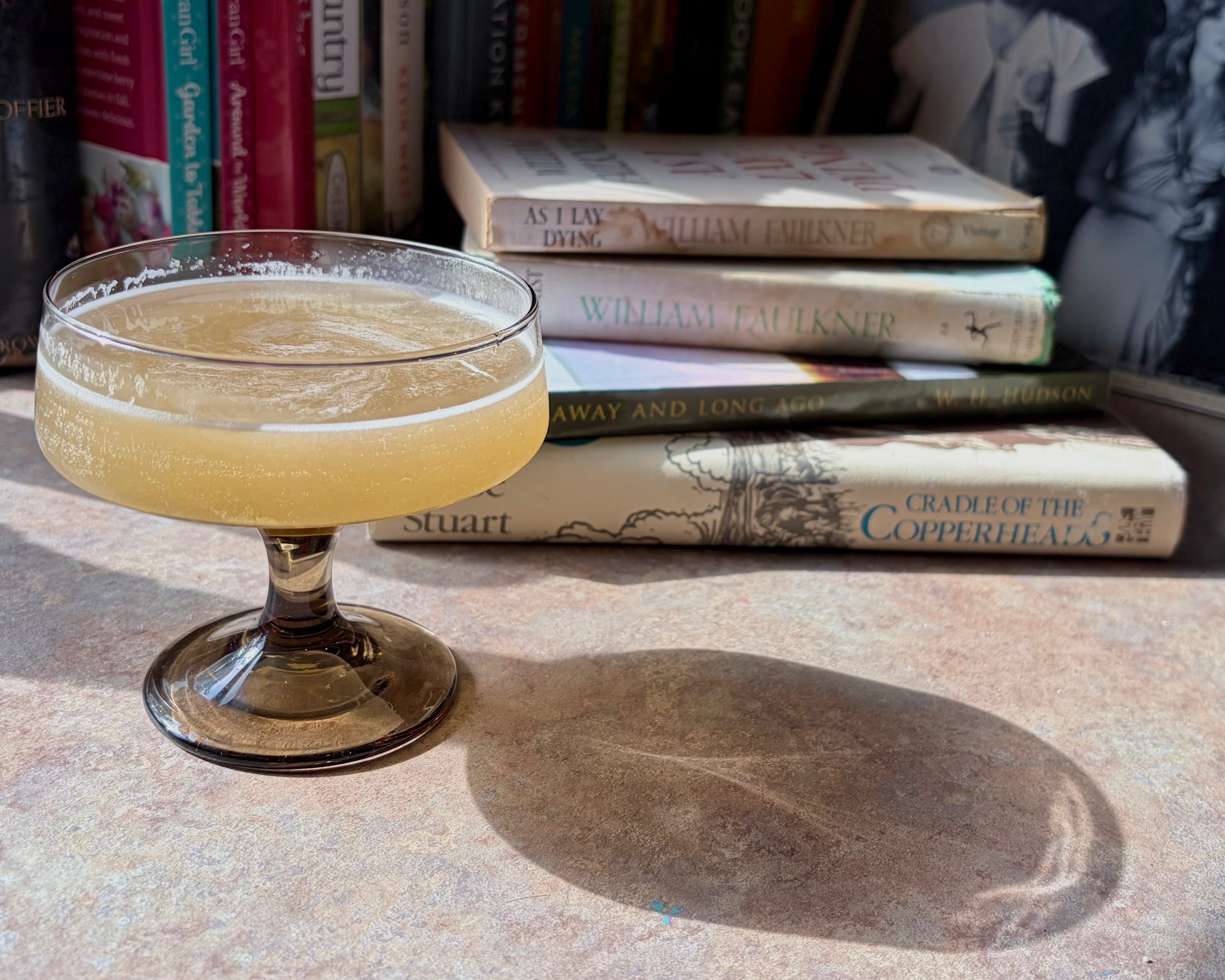
Recipe below, then how I got there.
Recipe
Hemingway, Embellished
2 oz Don Q Reserva 7 Años
½ oz fresh lime juice
½ oz fresh grapefruit juice
½ oz Naranja Agria (Badia or Goya, reader’s choice)
3 bar spoons (⅜ oz) Luxardo Maraschino
Shake with ice, strain into a coupe.
Testing Log
I locked the identity before anything else: rum-based, citrus-forward, less sweet than the classic version most people know. I didn’t have a true white rum on hand, so I started with Diplomático Planas. It’s not actually an unaged white rum, it’s aged and then charcoal-filtered back to clear, but it was the closest thing in the cabinet and a fine baseline to build from.
My first pour stuck close to the classic ratio, ¾ oz lime and ½ oz grapefruit against a half ounce of maraschino. It was rough in a way I wasn’t expecting. Not just sweet or sour, but something closer to an aggressively dry red wine, all acid with nothing underneath to round it out. The maraschino was getting steamrolled instead of doing its job.
Dropping the maraschino to ⅜ oz fixed the edge without tipping the drink sweet, so that ratio held for the rest of testing.
The citrus itself still wasn’t right, though. I needed to know whether the problem was the lime-to-grapefruit ratio or just too much total citrus volume. I poured two variants side by side to find out: one at ½ oz lime to ¾ oz grapefruit, which I preferred but which still read pithy from the grapefruit, and one at ½ oz lime to ¼ oz grapefruit, which my wife preferred but which let the maraschino get too cherry-forward again.
Comparing the two told me volume wasn’t the issue. The grapefruit’s bitterness was the actual problem, not how much citrus was in the glass overall.
Instead of going back and resolving that split cleanly, I brought in a new variable: naranja agria, sour orange. It’s a staple in Cuban cooking, and given Hemingway’s whole relationship with Cuba, working it in felt like the right kind of fun rather than a random pantry grab. I didn't have either on hand, hadn't even tried them before, and had to order both off Amazon. Rural Kentucky isn't exactly stocked with Cuban pantry staples.
A quick label check showed they’re built differently. Goya is water-first and more diluted, leaning on a lighter Seville orange character that reads more like oil and essence than juice. Badia is juice-first, more concentrated, and includes xanthan gum for body.
Both are marketed as meat marinades, which made me check the labels carefully for salt or garlic. Both came back clean and safe to use in a cocktail.
With sour orange in play, I ran three recipes back to back in the same shaker to minimize rinsing between pours, maraschino held steady at ⅜ oz throughout. Recipe C kept all three citruses at equal ½ oz pours. Recipe A dropped grapefruit entirely and let sour orange take its place. Recipe B dropped lime instead, leaving grapefruit and sour orange to carry the acid.
Recipe B was too sweet. Sour orange on its own can’t supply the sourness lime was providing, so without lime the drink lost its backbone. Recipe A was the opposite problem: technically balanced, but one-note, because lime alone doesn’t have the complexity to stand on its own once grapefruit’s gone.
Recipe C, equal parts across the board, was the clear winner. Three citruses splitting the load instead of one or two doing all the work turned out to be the answer the whole time.
With the citrus blend and maraschino locked, I moved to rum. I ran the same Recipe C build across three options: Diplomático Planas as my reference point, Don Q Reserva 7 Años, and Mount Gay XO.
Honestly, the differences were all half-steps. Don Q Reserva 7 Años came out slightly ahead this time, with Mount Gay XO close behind and Diplomático Planas a step back, but I wouldn’t be surprised if that order flipped on a different day with different palates at the table. Don Q is what’s locked into the final recipe, but treat that ranking as soft.
Last test was Badia against Goya head to head, same final build otherwise, just swapping the sour orange brand. Neither one beat the other. This isn’t a case where I can point to a clear technical winner and tell you which to buy. It’s closer to the kind of fierce, regional brand loyalty people have around Latin grocery staples, where the “right” answer depends more on what you grew up with than on anything measurable in the glass. Use whichever you’ve got.
One more change happened on the way to the final build. I’d been using Ocean Spray Unsweetened White Grapefruit Juice through most of testing because it’s what’s actually sitting on most home bar shelves. For the final recipe test, I swapped in fresh-squeezed grapefruit instead, and it was clearly the better call. That’s what’s in the locked recipe now.
What I Didn’t Go Back and Test
I never reopened the lime-to-grapefruit ratio question after introducing sour orange. Once Recipe C proved out, the equal-thirds approach made the original two-way split feel like a question I’d already answered indirectly, so I let it stay closed.
That’s a reasonable place to stop, not a gap. The three-citrus version solved the problem the two-citrus version couldn’t, and re-litigating the original split wouldn’t have told me anything Recipe C hadn’t already shown.
I also didn’t run a premium upgrade phase against the locked Don Q baseline, things like Rolling Fork Single Cask, Don Q Gran Reserva Añejo, or Mount Gay 1703. That’s fair game for a future round.
This drink came together faster than I expected once I stopped trying to fix the lime and grapefruit relationship directly and let a third citrus solve the problem instead. Sometimes the answer isn’t picking a side, it’s adding a third option nobody asked for.
Next up: Blackberry Bramble, once the backyard blackberries are actually ready for it.