
The French 75
Simple Formulas are the Hardest

The French 75 arrived at Harry’s New York Bar in Paris in 1915, during a war that would define the entire century. It was named after the French 75mm field gun--a reference to its kick, though the drink itself was designed to be elegant rather than brutal. The original recipe is lost to time and competing accounts. Some versions claim Cognac instead of gin, others suggest different ratios, and the drink migrated through the 1920s London cocktail scene where gin became standard. It’s closely related to the Tom Collins, except Champagne replaces the carbonated water. The formula is simple, but simple formulas are the hardest to get right.
The Recipe
2 oz Larrikin Daily Rind gin
3/4 oz fresh lemon juice
3/4 oz elderflower syrup
2 oz Veuve Clicquot Brut Champagne
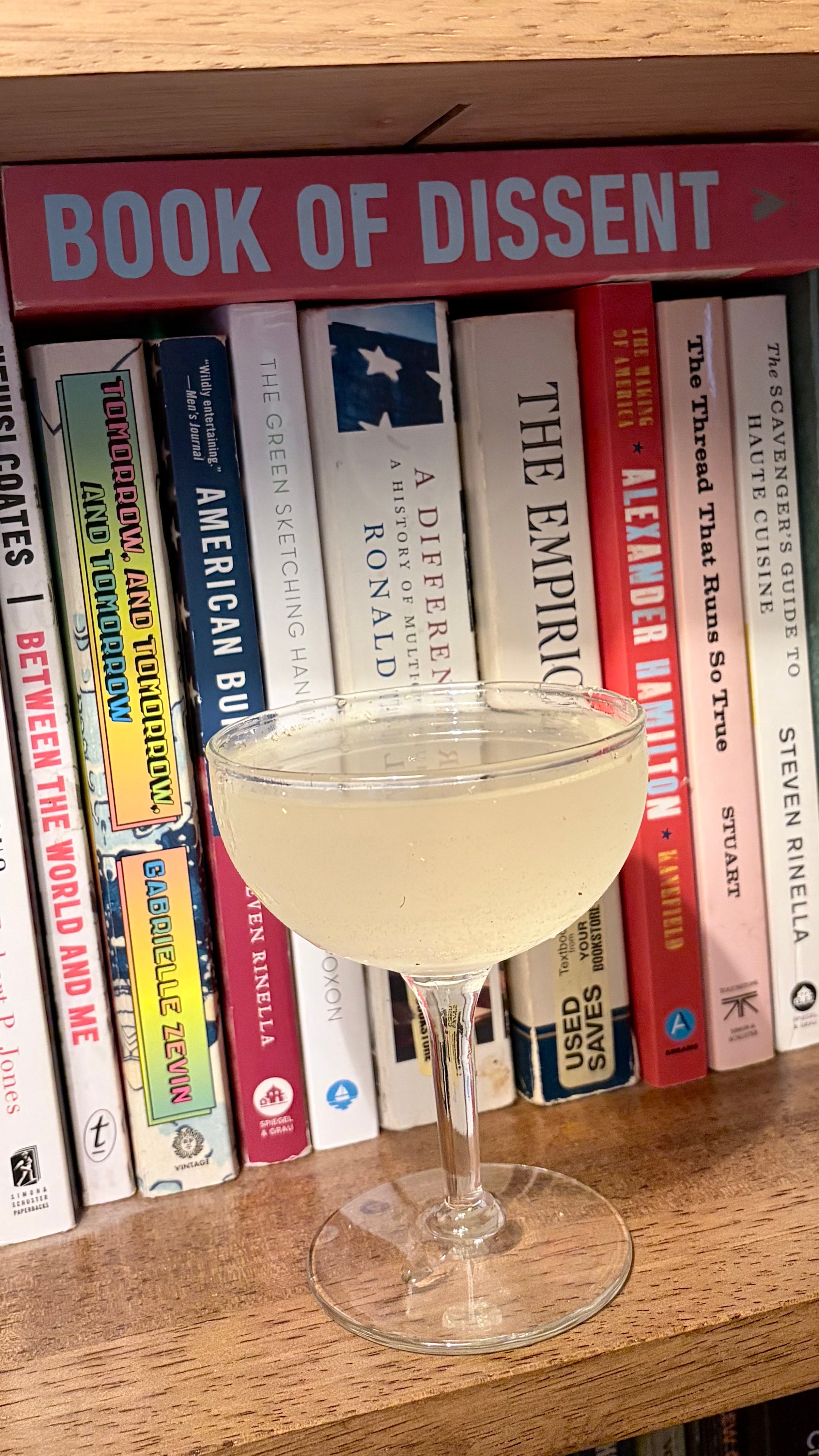
Method: Shake gin, lemon juice, and elderflower syrup with ice. Double strain into a chilled coupe. Top with Champagne. Garnish with a lemon twist.
A Month of Testing
This recipe is the result of four weeks of systematic development. The process locked variables in sequence--gin first, then sweetener, then citrus, then sparkling wine. Each step built on the previous one. Because the French 75 is simple, the testing had to be precise. There’s nowhere to hide, and every choice matters.
The Development
Gin--Session One
The baseline had to be London Dry. The French 75’s history is built on it, and deviating would require evidence that something else works better. For this baseline test, I used simple syrup as the control sweetener--flat, functional, neutral. The point was to isolate gin.
Bombay Sapphire was the control gin--clean, technically correct, perfectly fine in a way that makes you not think about it at all. That’s exactly what a control should do. It established the floor and made everything else readable by comparison.
Then came the real testing. Three other gins:
Larrikin Daily Rind came first. It brought presence without competing with the lemon or the eventual sweetener layer. Supporting rather than demanding. My partner preferred it immediately and clearly. Strongest candidate.
Larrikin Outback Tuxedo was genuinely close. Both Larrikins are well-made, and the Tuxedo was legitimately competitive. Session notes show “very good, distinguishable from Daily Rind but not in a way that resolves the competition.” This is where partner preference became decisive. Daily Rind it was.
Moons of Juniper (Copper & Kings, Louisville) was the outlier. 96 proof, built on grape brandy rather than grain neutral spirit. The label promises “assertive juniper, forest pine, subtle woody spice, dark chocolate, cloaked in warm tropical orange.” In the cocktail, it delivered. The complexity was real. I preferred it on my own palate--more interesting, more distinctive. But my partner’s preference for Daily Rind was consistent when we tasted them side by side. And practically, that’s the right call for a locked recipe. A gin that only works for one taster isn’t a recipe gin. Moons of Juniper went into variations instead. It will pair with hibiscus syrup later, where its assertiveness won’t compete but complement.
Decision: Larrikin Daily Rind locked.
Sweetener--Session Two
Now that the gin was fixed, the sweetener question opened up. Simple syrup had been the baseline, but with Daily Rind locked, the question became: could we do better?
Simple syrup was functional. It dissolved. It sweetened. And it was flat--no flavor contribution beyond sugar. In a drink with only four ingredients, that’s a liability. The French 75 is elegant precisely because it’s precise. A sweetener that adds nothing doesn’t belong, especially when you have options.
I tested two alternatives: elderflower syrup and hibiscus syrup.
Elderflower Syrup made the difference. The method matters here, and it’s worth documenting because home bartenders will want to make it:
Make a standard 1:1 simple syrup (equal parts sugar and water by weight). Pull it off the heat completely. Let it cool for a few minutes. Then steep elderflower tea bags in the cooling syrup. This is important: do not use boiling water. The delicate floral compounds break down in extreme heat. Taste every minute or so. You’re looking for a moment where the floral note is clearly present but not perfumy or soapy. Pull the bags when you hit that note. The result is a delicate, floral sweetener that integrates seamlessly with gin and lemon. It doesn’t dominate. It supports.
Hibiscus Syrup deserves honest space because it’s not a failure--it’s a different drink. Hibiscus is tart, dark, berry-forward. In the French 75, it pushed toward wine territory, spritzers, something more autumnal and less spring. It wasn’t supporting the gin and lemon the way elderflower does. It was competing. That’s not wrong for a variation--it’s wrong for the recipe. The Moons of Juniper gin will pair with hibiscus later, and that combination might work. But for now, elderflower won decisively.
One important note on sourcing: elderflower tea (flowers from the elder plant) is completely different from elderberry tea (berries from the same plant). Elderberry is tart, dark, jammy, closer to hibiscus.
Decision: Elderflower syrup locked.
Citrus--Session Three
With gin and sweetener fixed, the citrus question became structural. Standard lemon was the baseline, and the question was whether anything else made sense.
The French 75 is elegant, but it’s also a structural drink. The lemon provides the acid that balances the sweetness, the gin, and the eventual Champagne. It’s not a flavoring element--it’s foundational. That work requires real acidity.
I tested blood orange and grapefruit informally during this session (fruit was on hand). Both read sweeter and softer than standard lemon. And here’s the key: when paired with elderflower syrup, both amplified the sweetness rather than providing contrast. The drink didn’t need more sweet. It needed the cut of acid that only standard lemon provides at this point in the season.
Grapefruit is worth flagging for later work. During this session, when I added more Prosecco to the grapefruit version (exploring sparkling wine ratios), the drink moved into drier, more interesting territory. That might matter for a Blood Orange Paloma variation in May--a longer, more effervescent format could work. But for April, locked in: standard lemon is correct.
Decision: Standard lemon locked.
Sparkling Wine--Sessions Four & Five (The Key Finding)
By this point, three variables were locked. Only the final variable remained, and it’s the most editorially significant finding of the entire month. The sparkling wine doesn’t just modify the drink--it fundamentally defines what kind of drink the French 75 is.
I tested two options extensively over these final sessions.
La Marca Prosecco is citrus-forward, approachable, and bright. In this recipe, with everything else locked, it reads closer to a lemon drop than a Champagne cocktail. The carbonation is present but doesn’t carry the same complexity you get from Champagne. The drink is fresher, more summery, less structured. My partner’s clear preference. She noted: “This is the one I’d order on a Tuesday in June.” There’s nothing wrong with that. It’s a legitimate perspective.
Veuve Clicquot Brut is drier and more complex. It’s historically correct--Champagne is the drink. The acidity sits differently on the palate. The finish is longer. The drink reads as more substantial, more intentional. It’s my preference. My notes from tasting: “This is what the drink should be. This is the recipe.”
Here’s what matters: we have a split verdict, and both responses are legitimate. This isn’t a case where one is objectively right and one is wrong. This is a case where the choice determines the occasion and season the drink inhabits. The Prosecco version is approachable and accessible. The Champagne version is correct and elegant. I could argue for either one based on the situation.
I didn’t test Cremant d’Alsace (Lucien Albrecht), which would have sat between these two in acid and complexity. It wasn’t easily available locally. I’m documenting that gap honestly rather than guessing.
The published recommendation is Veuve Clicquot Brut as the recipe. La Marca Prosecco is documented as the practical substitute with a clear description of the character difference. You decide based on occasion, budget, and whether they want elegance or accessibility.
Decision: Veuve Clicquot Brut locked.
The Variation (Moons of Juniper + Hibiscus)
The gin I preferred on my own palate pairs better with hibiscus syrup than with the locked recipe. The juniper assertiveness and hibiscus tartness could create something genuinely interesting--more of a signature variation than a baseline cocktail. That’s worth developing separately, in a separate article, with its own testing. It doesn’t replace the locked recipe. It complements it.
The Result
A month of testing reduced to four bottles and a methodology. The French 75 is elegant precisely because it’s precise. Every variable locked in sequence. The gin supports but doesn’t dominate. The elderflower is delicate. The lemon provides structure. The Champagne defines everything. Get those right, and you have a drink that works as well in 2025 as it did in 1915--which is exactly what a classic should do.
Just because I didn't mention it in the article. I've spent the last handful of years being a "I don't like gin" person. I'm not sure I like it still but I like this cocktail.