
Stupid Simple Sour
An Irish Whiskey Sour for people who don’t want green beer

I wasn’t sure I could make a great whiskey sour with Irish whiskey. The lighter body means fewer places to hide imbalance, and none of the brashness bourbon brings to muscle through rough edges. Five testing sessions later, turns out I could. I just had to be deliberate about every decision.
This is where I landed. Not the platonic ideal, but the point where further improvements would cost more time and money than they’re worth. I could keep chasing perfection with $200 bottles of single pot still or high-acid citrus varieties that don’t exist at my grocery store. But diminishing returns are real, and knowing when to stop is part of the process.
The Recipe
Stupid Simple Sour
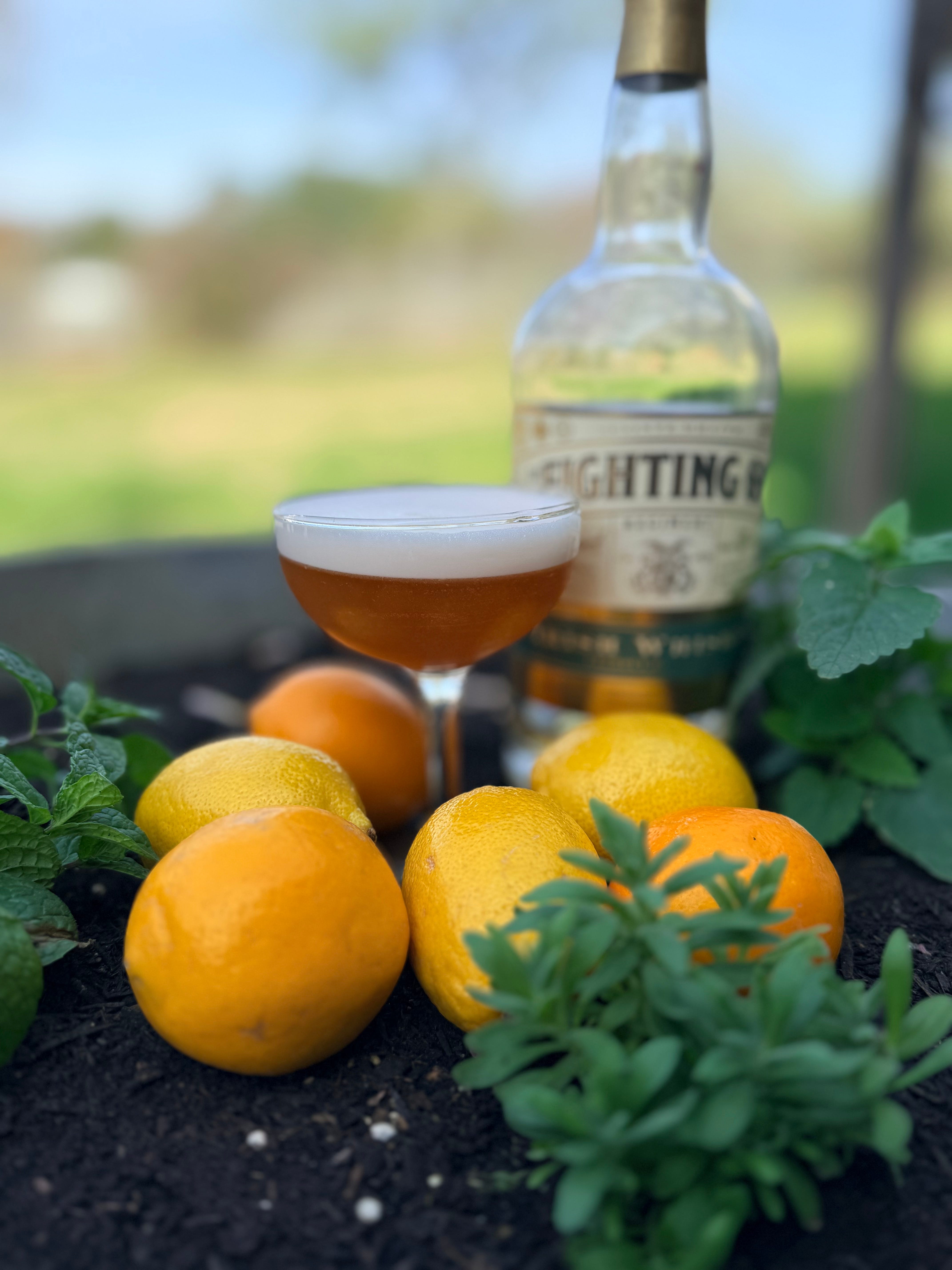
2 oz Fighting 69th Irish Whiskey
1 oz fresh Meyer lemon juice
½ oz agave syrup
1 egg white
2 dashes Angostura bitters
Shake all ingredients hard with ice for 30 seconds. Strain out the ice, then dry shake for 15 seconds. Double strain into a coupe(i know it’s supposed to be for ice shards but for me it’s for the egg white bits that might not get integrated…..not interested in a side of snot with my drink).
The Development
Irish whiskey’s appeal is its lighter profile. Smooth, approachable, easy drinking. That’s also why it’s tricky in a sour. Every choice you make shows up in the glass with nowhere to hide.
The standard whiskey sour template — grab any citrus, any sweetener, shake with foam if you feel like it — doesn’t hold up here. I tested systematically: one variable at a time, everything else constant, documenting what worked and what didn’t.
Foam Agent(s)
Aquafaba is the liquid from a can of chickpeas. It foams like egg white when you shake it, which makes it a vegan substitute for cocktails that need that silky texture. I’d seen it in other drink recipes, so I figured it was worth testing.
It wasn’t.
The chickpea undertone that bourbon would bury? Irish whiskey’s lighter body puts it on full display. This isn’t about dietary accommodation or personal preference. It’s format incompatibility. Notes of hummus have no place in a whiskey sour for me. Keep the chickpeas in the falafel.
Egg white resolved the problem. What it does for this drink is similar to what whipped cream does for a slice of key lime pie — it softens the citrus edge, adds textural interest, and makes everything feel more cohesive. You get the balance and the presentation working together.
I started with a traditional dry shake but I prefer reverse dry shake for this one — shaking with ice first, then straining and shaking without to build the foam. Traditional dry shake works fine too; this is just where I landed.
Locked: egg white, reverse dry shake.
Sweetener
I decided to make my own syrups for this project. Tested simple syrup, honey syrup, and agave against the baseline recipe.
Simple syrup did what simple syrup does. Clean, neutral, functional. Lets the other ingredients carry the weight.
Honey was the anticipated winner going in. Irish whiskey already has floral character, and honey feels like a natural complement. In practice, the two floral notes competed rather than layered. It didn’t taste bad — it just didn’t add what I expected.
Agave was the surprise. There’s a quality to agave’s sweetness that finishes quick and stays out of the way. The drink felt more cohesive without tasting any sweeter. Hard to articulate exactly what changed, but it was unmistakable in the glass.
One note on honey syrup: shelf life is about three weeks in my house before it starts fermenting. I discovered this when I went to make a coffee tonic and the syrup fizzed. That’s not a flavor profile I was chasing.
Locked: agave syrup.
Spirit Selection
With foam and sweetener locked, I tested four Irish whiskeys against the working recipe.
Fighting 69th was the control — an approachable Irish blend, nothing fancy. Light body, clean flavor, lets the recipe do the talking.
Keeper’s Heart Irish + American has a rye component that looked promising on paper. More body, a little more spice to push back against the citrus. But the sour format compressed everything. Whatever distinguished it from Fighting 69th neat didn’t survive the shaker. I do wonder if the simple syrup would have worked better here.
Waterford Rathclogh 1.1 is a single malt with real terroir character. Mineral, fresh grass, floral notes. Exceptional for sipping. When I shook it with citrus, it produced a medicinal edge that threw off the whole drink. The complexity that makes it interesting neat becomes a liability in this format. There’s an audience for this version but it wasn’t what I was going for.
I didn’t test Waterford Cuvée Koffi — it has really unique notes, and I didn’t want to continue to chase rabbits. Still curious though. Might circle back to that one after this is published. Something tells me it could work with the right adjustments.
Great sipping whiskeys and great cocktail whiskeys aren’t always the same bottle. Fighting 69th won because it did exactly what a cocktail base should do: provide a clean, authentic foundation and get out of the way.
Locked: Fighting 69th.
Citrus
Meyer lemon was my baseline throughout development. I used it because thats what Kroger Pickup put in my bag. The other variables optimized around it, so it’s worth acknowledging that a different starting citrus might have led to a different final recipe.
Tested Meyer lemon, standard lemon, white grapefruit juice, and blood orange.
Grapefruit threw me off. It was sweet in a way I wasn’t expecting — sugary sweet, not citrus sweet. Pushed the drink toward candy territory, which is its own thing and not what I was building here.
I wanted blood orange to work. Really wanted it. Same problem. Too sweet, not enough acid. Both options surrendered the structure that makes a sour a sour. But optically it would have been really nice to shoot.
Standard lemon was fine. Got the job done structurally. But it felt incomplete somehow — the right acidity without any of the aromatic complexity.
Meyer lemon landed best. The lower acidity and rounded, almost floral character paired with Irish whiskey instead of fighting it. Everything clicked.
Worth noting: Meyer lemon’s lower acidity required a ratio adjustment. This recipe uses 1 oz citrus to ½ oz sweetener — more juice, less sweet than the classic 2:1:1 template. The ingredient dictates the ratio, not the other way around.
Locked: Meyer lemon at 1 oz.
What This Taught Me
The foam works like whipped cream on pie. It softens sharp edges, adds texture, makes everything come together. Skip it and the drink feels unfinished.
Aquafaba doesn’t belong here(or anywhere in a cocktail maybe). What bourbon can mask, Irish whiskey exposes. Chickpea undertones are not subtle.
Meyer lemon changes the math. The classic sour ratio assumes standard lemon acidity. Different citrus means different proportions.
Agave is underrated in whiskey sours. Its quick-finishing sweetness keeps everything else in focus. Honey, the intuitive choice, created redundancy instead of depth.
Expensive doesn’t mean better for cocktails. Two bottles that cost significantly more than Fighting 69th got outperformed. The sour format compresses subtlety rather than showcasing it.
St. Patrick’s Day is one day. This works year-round.
Stupid Simple Sour.
Appendix: Syrups
If you’re making your own, here’s what I used:
Agave Simple 2 parts agave nectar to 1 part water by volume. Combine in a jar and shake until incorporated. No heat required. Keeps refrigerated for several weeks.
Honey/Sugar Syrup 1 part honey/sugar to 1 part water by volume. Warm gently to combine since the sweetener doesn’t cooperate cold. Keeps about three weeks refrigerated before fermentation becomes a risk.
What’s your go-to Irish whiskey for mixing? I’m curious whether anyone’s found a mid-range bottle that outperforms Fighting 69th in this format.